


She Would Have Won a Street Fight: Remembering Mel Nichols
She was a winning combination of sassy humor and serious engagement.
Essays in the “Remembrances” series pay tribute to poets who have died in the past year.
Before I had a face to attach to Mel Nichols, I knew her by the email handle she devised for her participation in the shaggily anarchic 2000s email poetry collective known as the Flarflist: “illuminatedmeat.” Under that moniker, she posted work like “I Google Myself” (more or less singable to the tune of Divinyls’s “I Touch Myself”):
I Google myself
And see you before me
Any fool would know
Just how much I Google myself
Get down on your knees &
Friend me and Poke me
and “Earth”:
space is dirty
the moon’s orbit is lumpy
and the assssteroids hit youthe assssteroids hit Uranus
and “You Should Be Nice to Call Center Workers”:
people should not be kept from baloney puberties
smarking smarking batwings of pain I am screaming
and punching myself the black balsa pieces crunch to the
consummate water
I only got to hang out with Mel in person a handful of times, but every time was a gift. The first was at the 2006 Flarf Festival in New York. I was struck by how much her personality was like her poetry: a winning combination of sassy humor and serious engagement. She knew the power of unfettered silliness, but it was never just silliness; it was like a whimsical flourish adorning her battle gear. Mel believed in things. I don’t know that she was ever in a street fight, but I’m certain that if she were, she would have won.
In 2009, she came with Rod Smith to Ashland, Oregon, to read in my creative writing program and blew my students away with her wit and warmth and knowledge. At a conference that same year in Chicago, I remember her as the de facto host of a hotel suite party that left most participants barely able to function the next day. She knew how to have fun! When I summon up the occasion in my memory, I see her standing on a table waving a bottle of vodka in each fist and shouting revolutionary slogans. This didn’t actually happen, but I’m going to cling to the image anyway, as I think she would approve.
I remember how Mel and Rod and Lacey Hunter and I all hunkered down in Rod’s cabin on the banks of the Shenandoah after a DC conference in 2010, and cranked out a 24-hour one-issue journal titled TITS (oh, calm down, it refers to the birds, like the one smashing the seed against the chair in “Bicycle Day,” see below). We solicited the contributors first thing in the day, and formatted their submissions as they rolled in. As I write this piece, I am unable to find where I shelved my remaining copies, and it makes me sad. I know the late Tom Raworth is in it, and Ben Friedlander, and Juliet Cook, and Dana Ward, and Buck Downs, and Amy King, and Lauren Bender, and a bunch of other people. This occasion was the last time I was in Mel’s physical presence, I believe, and it’s also my favorite recollection of our time together. The camaraderie in that cabin was a palpable force. We were committed!
As patently brilliant as Mel’s Flarf work is, it’s possible to imagine some readers who would dismiss it as mere goofery. Well, to hell with those readers! Nevertheless, for a comparative example of her range, you might look to her 2009 Edge Books collection Catalytic Exteriorization Phenomenon. Let the lyric virtuosity in this passage from “Day Poem (earth breathing fireworks)” wash over you:
we are falling from the echo’s wandering fire of spring
dissolving ink paper solar system all behind a great house
scraps of text blowing in the parking lot of a condo building
scraps of text on paper blowing away scraps of text through pixels
delete them please
let sequence pull me statue from the sea
The syntactical unraveling and re-raveling here produces an effect like intermittent moments of cinematic slow motion punctuating regular-speed sequences. The dreamlike, nearly ambient movement of the whole vibrates with the restless force of multiple streams of underlying activity.
The majority of the poems in Catalytic Exteriorization Phenomenon are titled “Day Poem,” which feels like a Frank O’Hara gesture, as does the ongoing “I do this, I do that” structure that breaks on occasion to let in extended observations and meditations. In “Day Poem (I think I’m not about to die),” the registering of environmental fluctuation leads, without transition, into an observation of statistical fluctuation:
temperature suddenly drops room gets unbearably cold
everybody notices today there are only 550,000 results for marmalade tree
I stop breathing and she says that is truth
The “results” would appear to refer to Google search results—a nod to Flarf procedure, perhaps, an incidental element in the author’s daily routine. The poem concludes on yet another O’Hara allusion: “I stop breathing,” recalling the last line of “The Day Lady Died,” in which O’Hara, after seeing a headline reporting Billie Holiday’s death, recalls Mal Waldron playing piano for her at the Five Spot, and how, in response, “everyone and I stopped breathing.” In Mel’s poem, this line redirects our attention to “everybody notices,” above.
Watch the attention shifting from line to line in this excerpt from “Bicycle Day” (one of five poems so titled):
the usual birds come to the feeder
I wonder what they say of the forest
I wonder has somebody already written this
like dahlias floating down the river
we know so little about the dead now
or when the moon will rise or from what direction
one titmouse picks out a black and white seed
bangs it against the wooden chair
Subtle swivels of speed and scope encourage pauses on key images and colors, allowing for adjustments of mental focus and reactions to physical events. The bird banging the seed against the chair ends the poem with a violent, visceral flutter of action.
Rereading this heartbreakingly graceful book, fragmentary and delicate and strong and alive with Mel’s humanity, it’s difficult not to just cite the whole thing. The aesthetic of both this and her Flarf work is not terribly different: both draw on registers of the random, the ridiculous, the pathetic. Both paint life in daring strokes that are true to its multidimensional, chaotic complexity. Both evoke a speaking, feeling subject whose identity is buffeted at every turn by the winds of absurd chance, but who maintains an unflappable resolve to stay centered even when everything around her is fractured.
I can’t find a way to talk about the sense of loss I felt when I heard about Mel’s passing. I don’t believe she would have wanted people saying sad things. She made so much possible for me as a poet, and she brightened my world as a person. I will always hold her happy image in my heart.

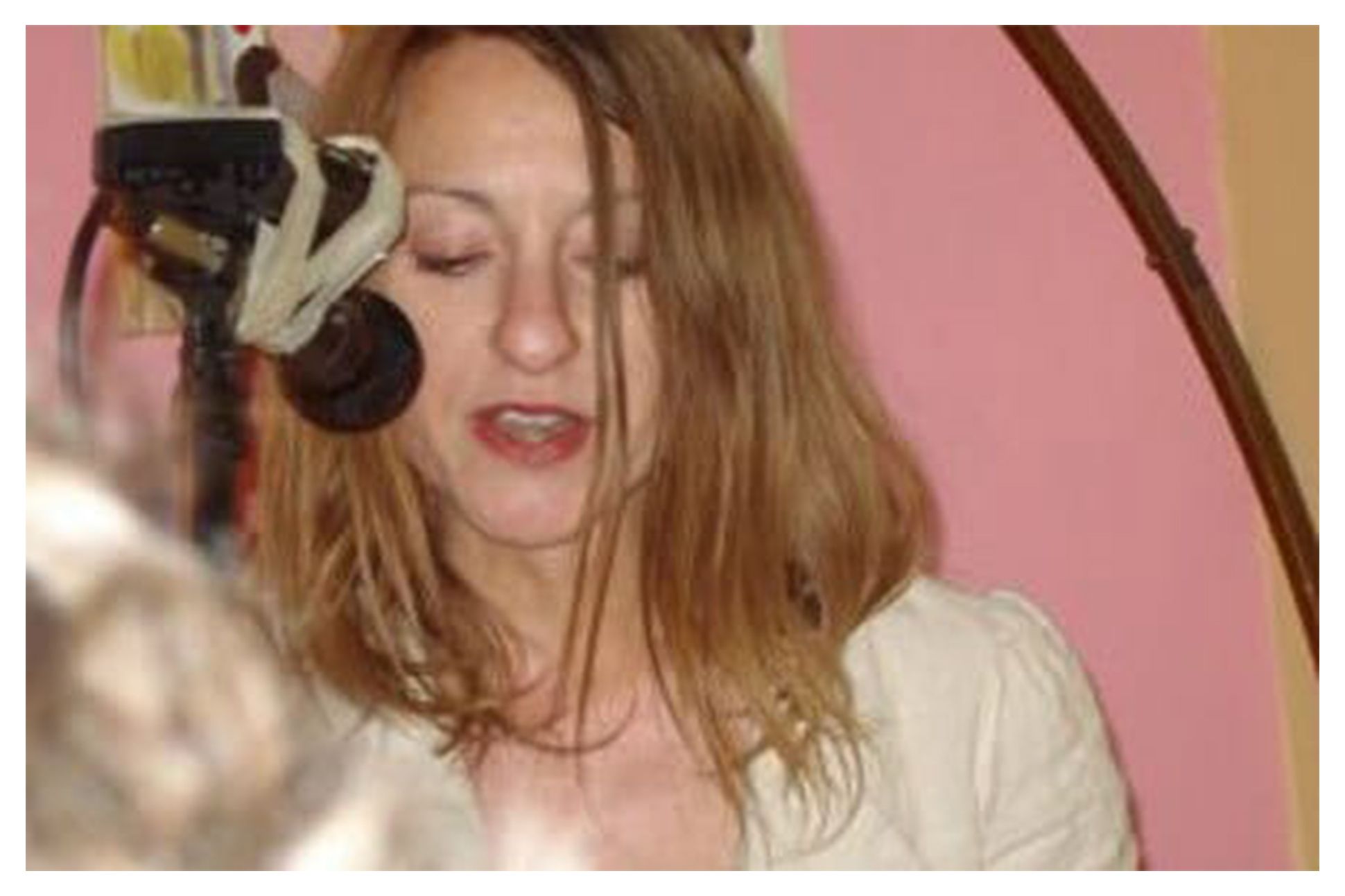
Flarf Festival, April 2008. Photo courtesy of the author.
K. Silem Mohammad is the author of several books of poetry, including Deer Head Nation (2003), A Thousand Devils (2004) Breathalyzer (2008), and The Front (2009). In The Sonnagrams (2009), Mohammad anagrammatizes Shakespeare’s sonnets into all-new English sonnets in iambic pentameter. He is also editor of the poetry magazine Abraham Lincoln and faculty editor of West Wind Review. He teaches English...