


The World Is Yours. Here, Take It.
Joe Brainard's C Comics ran for only two issues, but it remains a testament to the absorbing pleasure of making art with your friends.
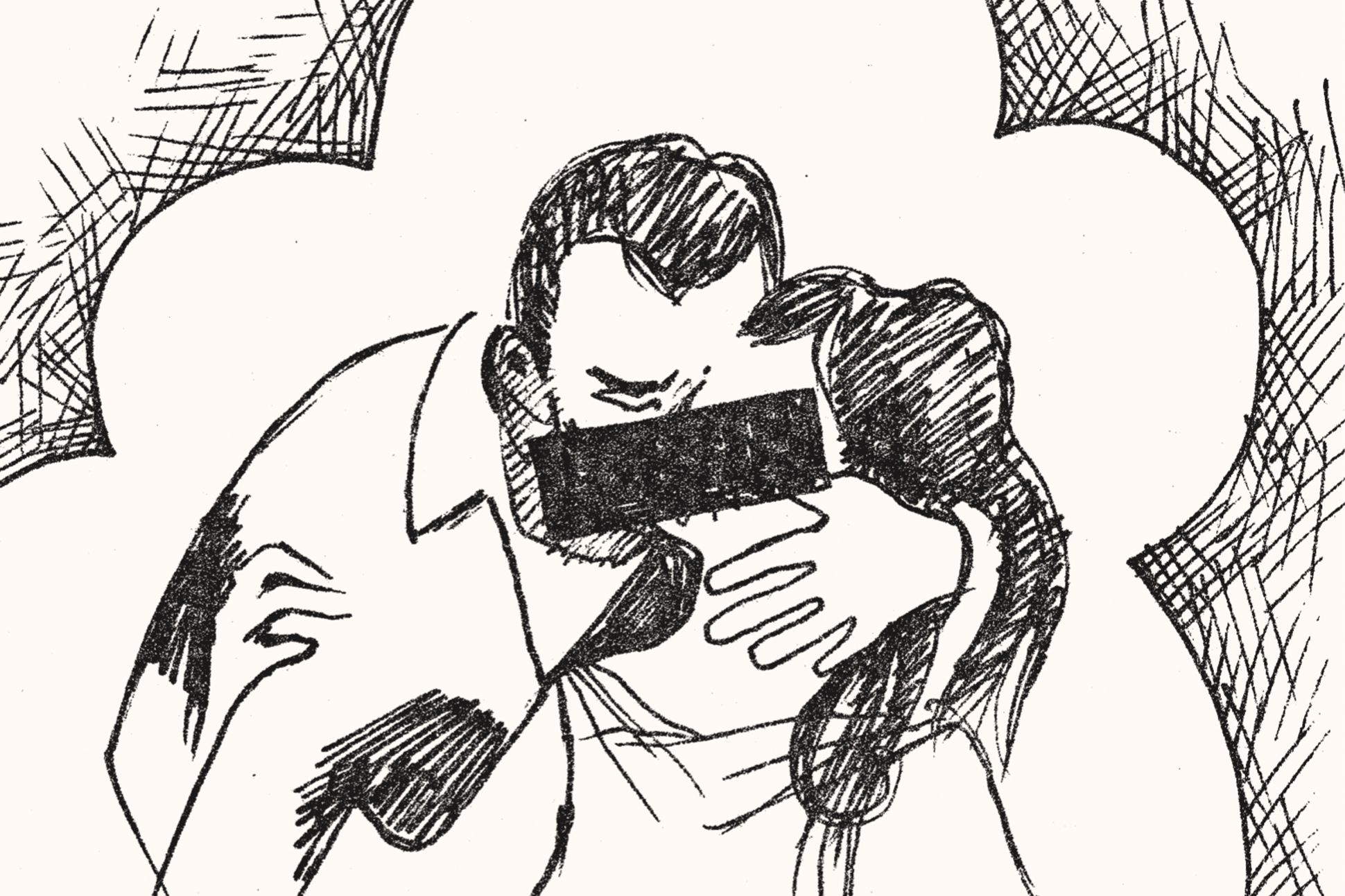
Courtesy New York Review Books.
In a feature for ArtNews in 1967, the poet James Schuyler called his friend Joe Brainard a “painting ecologist”—someone whose work “draws the things it needs to it, in the interest of completeness and balance, of evident but usually imperceived truths.” Brainard belonged to a human ecology as well: a downtown New York scene comprising painters and poets, among them Schuyler, John Ashbery, Jane Freilicher, Kenward Elmslie, Fairfield Porter, and Frank O’Hara. Within that larger group was the Tulsa contingent—Brainard, Dick Gallup, and Ron Padgett, high school classmates who, along with the likeminded Ted Berrigan, transported their avant-garde sensibilities from Oklahoma to New York in the early 1960s.
The New York School is notable for the poets’ attentiveness to visual art and the artists’ engagement with language. The distance between the two forms—to the extent it existed at all—was frequently bridged by collaborations: Larry Rivers and Frank O’Hara’s dialogic lithographs Stones (1957–60), for instance, or Ted Berrigan and George Schneeman’s In the Nam What Can Happen? (1967–68), a handmade book passed back and forth between poet and artist over the course of a year. But none merged the two forms as inventively as Brainard.
In 1963, Berrigan published the first issue of C: A Journal of Poetry, featuring poems and a play by the Oklahoma cohort. C ran for a dozen issues, showcasing the activities of the New York School milieu, including Brainard’s writing and art. A year later, Brainard produced an offshoot, C Comics, that ran for only two issues—July 1964 and January 1966—and are perhaps the surest embodiment of Schuyler’s description. Each issue was a collaboration: Brainard composed the images, while various poets supplied the text. In other words, to complete the comics, Brainard drew to the work the thing he most needed—his friends.
The first issue contained some 32 comics, most only a page long, by Brainard and 14 contributors. It was mimeographed on legal-size paper and side-stapled, giving it the grainy, low-contrast look of a large-scale DIY zine. The second issue was physically smaller but more ambitious: 14 comics, nearly all between five and 12 pages, plus numerous advertisements by Schuyler and Brainard for fake products, such as luxurious C Cream and rugged Dan River shirts, along with real announcements for new books by contributors. Brainard ran 600 copies of issue #2 on an offset printer, producing crisp blacks and sharper lines, and had each copy bound. The cover price of the second issue was a dollar.
Today, copies of the issues are rare and sell for hundreds or thousands of dollars. With the publication of The Complete C Comics (New York Review Books, 2025), readers now have access to one of the great wonders of the postwar New York scene. As Nick Sturm has argued, C Comics “constitutes a major intervention in alternative comics”—an idiosyncratic, hierarchy-busting blend of poetry, fine art, and newspaper strips that preceded the provocative, often raunchy Zap Comix by four years. Like much of what emerged from the alternative and underground presses of the era, C Comics ignored traditional assumptions about what constituted art, writing, and comics. “I didn’t care to worry myself about what was poetry & what wasn’t,” Berrigan once said of literary categories. “All that interested me was whether or not it moved me, surprised me, delighted me, bored me, etc.”
For C Comics, Brainard drew the art with empty speech and thought balloons, then distributed the pages to poets, like a collage or readymade awaiting a second set of hands. Bill Berkson recalled that their collaborations typically began at Brainard’s invitation—sometimes sent through the mail or, as Berkson put it, “as we sat around in his studio or in [Kenward Elmslie’s] house in Vermont, he would quietly ask if I felt like doing ‘some works’.” In these collaborations, process not only shapes the outcome but becomes a subject in itself. “Collaborating on the spot is hard. Like pulling teeth,” Brainard wrote in his diary on July 29, 1969:
There are sacrifices to be made. And really “getting together” only happens for a moment or so. If one is lucky. There is a lot of push and pull. Perhaps what is interesting about collaborating is simply the act of trying to collaborate. The tension. The tension of trying.
Artmaking, for Brainard and his collaborators, was an activity—not an end—and their process was intuitive rather than mechanical. In an interview with Anne Waldman in 1978, she asks Brainard if he can sustain a character for a hundred pages. He replies that the character’s progression of events “would have to come to me . . . come from the involvement of writing.” He draws a line on a piece of paper and explains that what happens next—whether the line gets longer, or curves—isn’t planned in advance but comes to him “as a logical development from what I’d already done.” Put another way: “One object or one word told me where the next object or word would go.”
Comics were a natural medium for the group. “They were our first art and, in many respects, our first literature,” Berkson once said. Brainard felt that if a work of art included words, the text needed to function as a visual element, integrated into the composition, just like images. Comics made sense to him because their unique interplay of words and pictures form a unified visual that allows for new expressive possibilities. The collaborations in C Comics often place text and images in incongruous relationships, introducing openness and chance. The work can be narratively untamed and structurally loose, yet it still relies on underlying grids or the reading patterns of comics for coherence. Predecessors for this kind of playful collaboration include Surrealist and Dadaist chain games and compositions, such as What a Life! (1911), a satirical biography of an invented Edwardian gentleman by E.V. Lucas and George Morrow. The book’s illustrations are snipped from a catalogue for the London department store Whiteley’s, and the plot takes its cues from the images.
Another predecessor is Raymond Roussel’s 1914 novel Locus Solus, whose protagonist, the scientist Martial Canterel, creates outlandish hybrid inventions at his titular villa. There, he is “surrounded by disciples full of passionate admiration for his continual discoveries, who lend their enthusiastic support to the completion of his work.” Wordplay, constraint-based methods, homonymy, and privileging the sound of a word over its meaning were central to Roussel’s writing. Ashbery, Koch, and Schuyler borrowed the title of Roussel’s novel for their literary journal, published by Harry Mathews between 1961 and 1962. Though its run was brief, this Locus Solus convened the poetic vanguard under one cover. Its contributors overlapped with those of C: A Journal of Poetry and C Comics and experimented with techniques like collage and cut-up to disassemble language and examine its pieces.
In 1965, Brainard wrote to Ron Padgett and his wife Pat about his plans for the never-realized third issue of C Comics: “Some time ago you wrote some things which I am using as a game page for ‘C’ Comics. Example: ‘Substitute one letter in my name to spell a fruit.’” The naming of C: A Journal of Poetry resulted from a similarly coy playfulness. “I wanted a name without connotations,” Berrigan explained, “and so, while thinking about Marcel Duchamp, one day I said to myself, ‘A’ ‘B’ ‘C’ ‘Voila!’ and there it was. ‘C’ ‘See’ ‘Sea’ ‘C# #(adinfinitum)’.” “C” might not point to anything specific, but in connecting it with “see,” Berrigan produces an unfiltered directive that informs so much New York School poetry: look around, observe, and write it all down with immediacy and directness.
“The Fleur-Love Story,” by Peter Schjeldahl and Brainard in issue 2 of C Comics, tells the dramatic and dangerous stories of certain plants. In one thought balloon, an unpredictable iris mourns the absence of its inconstant owner. In the next, its mood swings to violence: “Ugh! Putrid rose-stink! Grrrr! Those disgusting pansies! I’ll kill them all! As you can see, I am a fleur du mal.” In “Thinking,” by Barbara Guest and Brainard in issue 1, Guest’s nonsensical lines refer to Brainard’s delicately drawn images so obliquely, if at all, that their relationship comes mainly by dint of proximity. Yet the flow of information is uncanny, even if undecipherable, and has the feeling of a children’s rhyme: “Black Cherry / Blossom / Miyako / State / A bed in air / Before I put up my hair.”
Like the era’s poets, the comics-makers looked to new sources for inspiration, drawing not just on the group’s poetry and theatrical writing but also on extraliterary material. Edwin Denby and Brainard’s “Shine” repurposes a line ostensibly from the formalist art historian Roger Fry’s Last Lectures (1939)—“In the finest work of Maya sculpture we meet a plastic sensibility of the rarest kind”—for a comic that literalizes the phrase plastic sensibility, knitting a sequence of military insignia together with discrete panels depicting plant life, love, and joy. Kenneth Koch and Brainard’s “What Do You Know About . . .” explores facts about Persian and Japanese culture in the style of educational comics. In the first issue, Robert Dash and Brainard’s “Color Me” mimics paint-by-numbers kits with an unlikely palette of “colors,” including wit, probity, dignity, valor, Pict, and Celt. In one “kit,” a football player is colored in using terms like grace, sport, presidential, and cop. A thought balloon adds still more tonal ambiguity: “Tiny exhaustion from Saturday’s endless lugging pellmellish . . . Must get my tail in and that door shut . . . Tear tendon, break brain, I have combed my hair and Gloria can go to the dogs.”
In a series of advertisements or PSAs in the second issue, Schuyler and Brainard dramatize Hilton Kramer’s scathing New York Times review of paintings by Jane Freilicher and Alex Katz. In one, excerpts from the review become lighthearted banter between a well-dressed man and woman: “Say, Jane, I hear you’re ‘lacking formal resources’!” “Yes, Alex, I ‘faltered badly depicting interior-exterior views intersected by planes of windows’!” As the conversation descends the page, Brainard scatters splashes of ink that resemble drops of blood.
In collages, paintings, drawings, assemblages, prose, poetry, and design, Brainard displayed a restless, intimate originality. He was also a cultural magpie who could mimic a variety of visual styles from art history, advertising, and other comics. In his drawings for C Comics, Brainard’s pen is endlessly versatile, and his collaborators rise to the challenge. “El Retrato del Engaño,” created with O’Hara, uses the form of a melodramatic 1940s romance comic to hash out a woman’s affair with a married man (“Good Christ, how did I know what he meant by his ‘boffing’? . . . I’m not really that kind”) and her bisexual quandary (“I wonder if I can triumph over my lesbianism”). On the next spread, a one-page horror or crime comic by Elmslie and Brainard introduces a tearful, distraught woman fleeing some dark danger, only for the action to be blotted out by a recipe for jellied-shrimp-and-coleslaw salad—the real horror. Koch and Brainard’s absurdist take on bodybuilding ads published in the backs of comic books finds its corollary in “Beach Party,” by John Stanton and Brainard: the story of a physically weak man who transforms himself and earns the respect of his girlfriend by taking a nine-week course to become a poet. “Be a winner in everything!” the ad concludes. “Be a poet!”
In “Joan and Ken,” Guest’s dialogue resists Brainard’s drawings of an emotional domestic exchange. Instead of relationship melodrama, we get literary camp. “I’ve been reading Colette,” Joan admits, head in hands. From the shadows of their bedroom, Ken replies, “Tell me before I put my cigarette out, why did Cheri die?” Ken and Joan reconcile, but in the fourth panel, the couple and their children appear with their faces scratched out. The caption reads, “The reunion made them feel better, even if the mystery increased.” In the final panel, Joan wears a glazed expression, having repressed any concerns about her marriage. In what might be interpreted as double entendre, she tells the reader, “The secret is violet soap and living in an old house and never making any repairs.”
“Poem,” by Frank Lima and Brainard, is a two-page minimalist homage to artistic potency. On the left page, a tape dispenser bears a thought bubble: “IRON.” Below it, an inkwell shares the same thought. The dispenser and the inkwell serve as emblems of collage and comics—two visual mediums that create ideas and images and give them weight, so to speak. Nancy, the titular character from Ernie Bushmiller’s long-running newspaper strip, appears on the right page. She is drawn in black on a white background (her shape held, we might say, by the ink). She too has a thought balloon: “I have burned down the sky.” To do so literally is impossible, but it lies within the poet’s and artist’s power to imagine the impossible and insist on the immensity of art and language.

Courtesy New York Review Books.
Padgett has written that Brainard’s first introduction to Nancy came through the Sunday funny papers of the Tulsa Sunday World, when he was a boy. Nancy was in good company: her strip ran alongside Beetle Bailey, Dick Tracy, Dennis the Menace, L’il Abner, Steve Canyon, and Archie. Nancy was Brainard’s favorite; he incorporated her into more than a hundred comics, collages, and paintings. The poet Ann Lauterbach has argued that he inhabited the character of Nancy: she was his comrade and guide, and they shared a mask of simplicity and good humor that concealed complex, very human drives like ambition and desire. Lauterbach also calls Brainard and Nancy the “perfect camp couple,” citing, by way of Susan Sontag, their mutual tenderness and delight in the foibles of human nature. It seems less likely that Brainard simply saw Nancy as a stand-in for his sexuality than as a desired reflection of himself. “If possible I would sit next to her, and it seems to me that, if possible, she would sit next to me,” he writes in an imagined scenario. In Brainard's hands, Nancy could be anyone, anything, or anywhere in art history—a Picasso or a porn actress, a vision in a cloud overhead or a building in New York City, a boy or a girl; hard to pin down but easy to spot.
Characters from the comic strips Brainard and his friend read as kids appear throughout C Comics, but in a solo outing in the second issue, he brought them all together in a single work. “People of the World: Relax!” features Dick Tracy, “Red” Rabbit, Nancy, Annie and her dog Sandy, Dennis the Menace, L’il Abner, Krazy and Ignatz, Private Zero, Jiggs, and others. If Brainard is Nancy, then these are Brainard-Nancy’s friends: Ron, Dick, Barbara, John, Ted, Bill, Pat, and so on. They all exist in a world of their own making—together. The comic laughs off danger and distractions and encourages readers to pursue their desires, whether they include becoming a dancer or masturbating in the shower. “Do not be afraid,” it advises. “Some of the best people I know are not afraid.” The last page shows a smiling man and woman dancing arm in arm, thinking, “The world is yours. Here, take it.” Brainard’s reminder in this last line breathes life into Schuyler’s “unperceived truths.” The world is ours to create: an observation at once obvious and unspoken. Brainard directly exhorts the reader to see everything and live freely. “Look at the tree,” he writes. “Climb every mountain.” The work in C Comics is a model of this joyful discovery and of the instinctual, absorbing pleasure of making art with one’s friends.
Nicole Rudick is the author of What Is Now Known Was Once Only Imagined: An (Auto)biography of Niki de Saint Phalle (Siglio Press, 2022).