


On Translating Sylvie Kandé
Kandé’s Gestuaire is a collection of real and surreal gestures inspired by such themes as her childhood memories, postcolonial trauma, Diola culture, and the horrors of war.
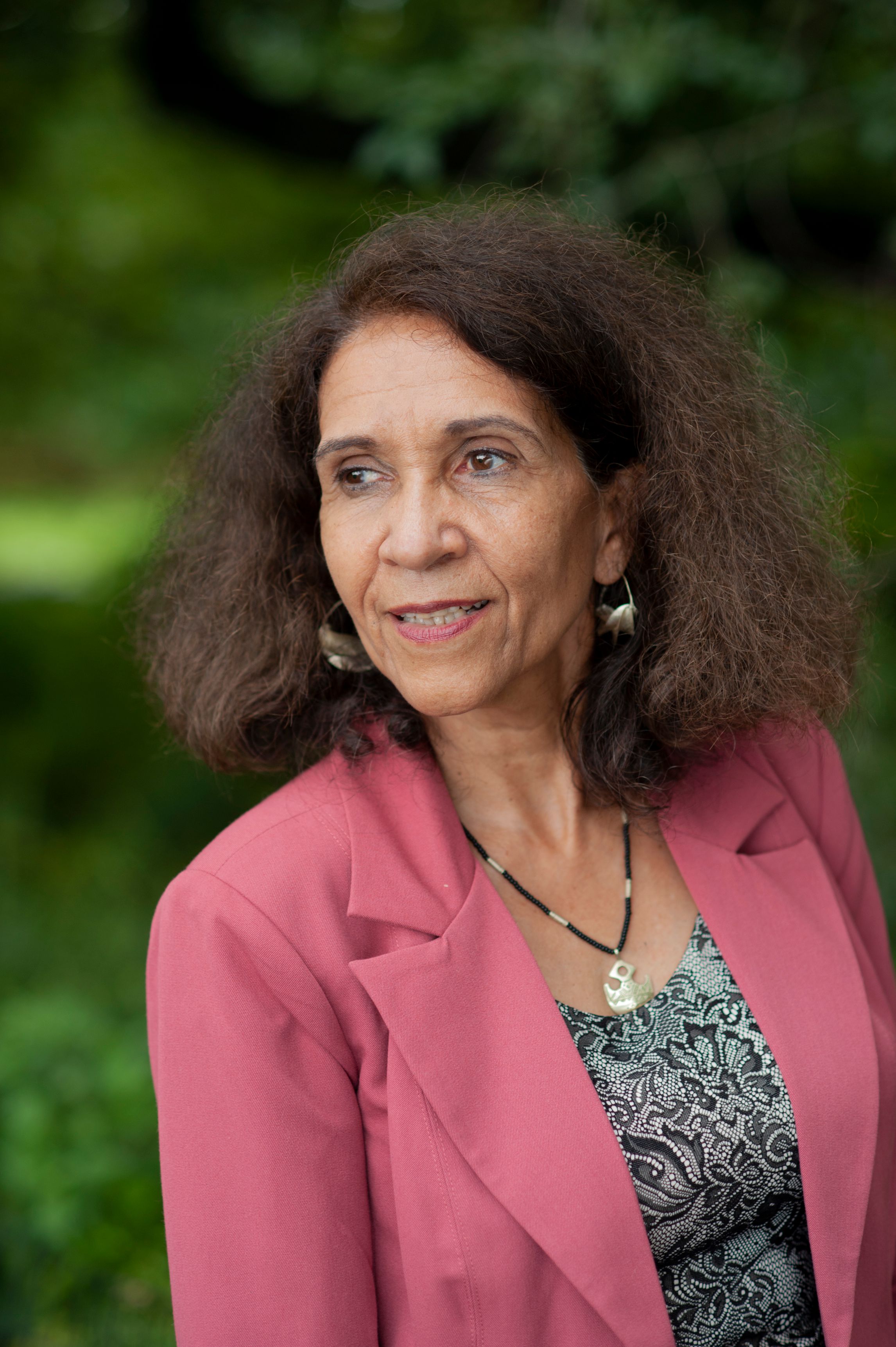
Photo by Sylvain Durand
I was introduced to Sylvie Kandé through Patrick Williamson, an English poet, who included her work in his anthology titled Turn Your Back on the Night: Ten Poets from French-speaking Africa and the Arab World (Antonym Collections, 2023). I was drawn to her third volume of poems, Gestuaire, published in 2016 by Gallimard, one of the most prestigious publishers in France. In the tradition of Michel Leiris’s Glossary, which was a collection of glosses, Kandé’s Gestuaire is a collection of real and surreal gestures inspired by such themes as her childhood memories, postcolonial trauma, Diola culture, and the horrors of war.
“Colophon I” and “The Egg and the Stone” are selections from Gestuary, in my translation, forthcoming from Seagull Books in March. One of the challenges I faced with “Colophon I” was how to render in English the expression “penser en spirale,” which appears in the penultimate line. I first thought of “circular thinking (reasoning)” but quickly rejected it, as it did not take into consideration any gradual widening or tightening around a central point, inherent in a spiral. I also considered “corkscrew thinking” but rejected it because of its connotation of removing corks from bottles—something not germane to the poem. “Spiral thinking” seemed more apt, as it made me think of its close association with “spiraling” into negative thoughts.
“The Egg and the Stone” references a proverb that says that when a mother and her child are in conflict, the mother is the stone and the child is the egg. In terms of translation challenges, I noticed that this very lyrical French text contained several patterns of alliteration, such as F alliteration in the fifth line (“effleurer il se fêle”), J alliteration in the seventh line (“jaune jaillit”), and P alliteration in the third-from-last line (“piètre sacrifice poisseux”). I was able to honor this music in my translation with C alliteration in the fifth line (“causes it to crack”), G alliteration in the seventh line (“gushes out of this gash”), and S alliteration in the third-from-last line (“sticky sacrifice”).
Nancy Naomi Carlson is a poet, translator, essayist and editor. She is the author of Piano in the Dark (2023), An Infusion of Violets (2019), and Kings Highway (1997), as well as the chapbook Complications of the Heart (2003), winner of the 2002 Robert Philips Poetry Chapbook Prize. Carlson's translations include Gestuary by Sylvie Kandé (2026), When We Only Have the Earth by Abdourahman A. Waberi...